
Hon Mun: what you will see underwater
Hon Mun is a small rocky island about 10 km from central Nha Trang. Around it and the nearby islands lies Vietnam’s first marine protected area — which is why every dive boat in town heads here.
Updated:
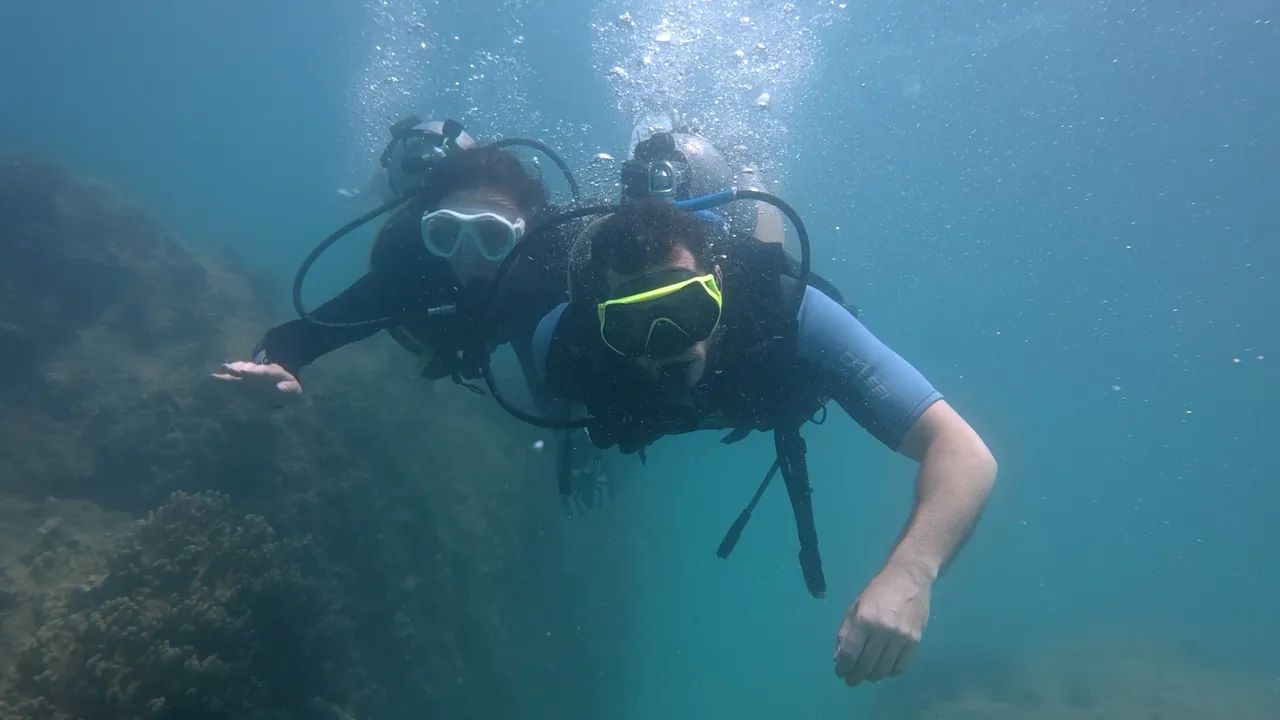
Why Hon Mun
The Hon Mun marine protected area project started in 2001, the first of its kind in Vietnam. It covers Hon Mun, Hon Mot, Hon Tam, Hon Tre and several nearby islands. Surveys recorded more than 150 species of hard coral and nearly 200 species of reef fish here. The name means “ebony”: the island’s cliffs and caves are almost black.
The dive sites we use
- Madonna Rock — the open side of Hon Mun: boulders, swim-throughs and the clearest water on good days. A site for the second dive and for certified divers.
- Hon Mot — a small reef next to Hon Mun: calm, shallow and full of coral. Great for a first dive.
- Hon Tam — reefs facing the city, sheltered from the swell and useful on windy days.
- Dam Bay — a bay on Hon Tre island with calm water, good for training and snorkeling.
We pick the site each morning based on wind and swell. Our visibility forecast scores each of these sites separately.
Reef life
Hard and soft corals, anemones with clownfish, parrotfish, butterflyfish and angelfish, schools of fusiliers, morays in the cracks, nudibranchs, sea stars and urchins. With luck, a turtle or a ray. Nha Trang is not a big-animal destination: its beauty is in colour and macro life.
How to dive in the reserve
- Do not touch anything or stand on coral — one fin kick can break years of growth.
- Do not feed the fish: it changes their behaviour and harms the reef.
- Use reef-safe sunscreen, or cover up with a wetsuit or rash guard.
- Take nothing home — no shells, no pieces of coral.
The marine park fee is already included in our trips.